
New Mexico Air Filter Guide: MERV Picks, Dust Season Tips, and Change Schedule
A New Mexico air filter works harder than most people realize. In Albuquerque, Rio Rancho, Santa Fe, and across the region, wind-driven dirt, smoke, and seasonal pollen constantly move through the air and into your home. That makes air filters essential for protecting indoor air quality and your HVAC system.
Choosing the right Mexico air filter is about balance. You need strong filtration to capture solid particles and pollutants, but you also must protect airflow and system efficiency.
This guide explains MERV recommendations, dust-season strategy, and how often to replace filters so your home maintains clean air year-round.
Why Air Filters and Air Quality Matter More in New Mexico
New Mexico presents unique air quality challenges. Albuquerque spring winds can create heavy dust events, while Rio Rancho’s open exposure increases sand and particulate matter entering homes. In Santa Fe, higher elevation and dry conditions allow small particles to stay airborne longer.
Cottonwood season adds to the issue. Smoke from regional wildfires can also introduce pollutants that affect health and comfort. Without proper filtration, these materials enter your hvac system and circulate throughout the building.
Clogged air filters restrict airflow, forcing heating and cooling equipment to work harder. This reduces efficiency and can create short-cycling problems, higher utility bills, and system strain. If airflow drops, customers may notice warm air from vents, strange odors, or even headaches caused by poor indoor air quality.
If you see signs of strain, scheduling AC repair or furnace repair can prevent larger issues. Air sealing improvements through home performance upgrades can also reduce how much dust enters your home in the first place.
Understanding MERV Ratings for a New Mexico Air Filter
What Is MERV?
MERV stands for Minimum Efficiency Reporting Value. It measures how effectively air filters capture particles of different sizes, including dirt, dust, smoke, and other pollutants.
Residential filters typically range from MERV 1 to MERV 16. The higher the number, the smaller the particulate matter the filter can trap. However, higher filtration also means more resistance to airflow.
Recommended MERV Range for NM Homes
For most homes in NM, we recommend:
- MERV 8 for baseline dust control
- MERV 11 for improved filtration of pollen and smaller particles
- MERV 13 for households concerned about health, smoke, or fine pollutants
A higher rating is not always better. Some HVAC system designs cannot handle restrictive filters without reducing airflow and overall efficiency. In that case, pressure builds inside the system, which can damage components over time.
Our licensed, background-checked, NATE-certified technicians can evaluate static pressure and determine the right size and filter type for your equipment. During a maintenance visit or through our Club Membership, we check airflow and ensure your air filter supports long-term performance.
Dust Season Strategy: Protecting Clean Air and Your HVAC System
In New Mexico, March through June often brings peak wind and dust activity. Replacing your New Mexico air filter before this season starts helps reduce buildup inside your system.
After major dust storms, it is wise to check the filter again. Solid particles can quickly clog materials inside the filter media, reducing airflow. Keeping return vents clear and free of dirt also improves performance.
Homes near open land in Edgewood or Los Lunas may need more frequent attention. Duct sealing services can reduce how much outside air enters through leaks, while evaporative cooler owners should monitor filters during seasonal changeover.
A seasonal HVAC tune-up allows our company to inspect heating and cooling components, confirm proper airflow, and support long-term efficiency.
How Often Should You Replace Air Filters in New Mexico?
Most homeowners should replace air filters every 1–3 months. The exact time depends on usage, filter size, and environmental exposure.
Change more frequently if:
- You have pets
- Anyone in the home has allergies
- Construction is happening nearby
- Your home sits close to open desert
- Your AC runs heavily from May through July
Heavy summer cooling hours increase the amount of air moving through the system. That means filters load faster with particulate matter.
Set a monthly reminder to check the filter. Hold it up to the light. If you cannot see light passing through, it is time to replace it.
Align filter checks with your Club Membership maintenance visits. During service, we inspect filtration, confirm proper installation, and answer any questions about improving indoor air quality.
If basic filters are not meeting your needs, explore advanced options through our Air Filtration Systems & Air Purifiers to see what solutions may better support your indoor air quality. We offer a variety of solutions for residential and commercial customers across Albuquerque and the surrounding region.
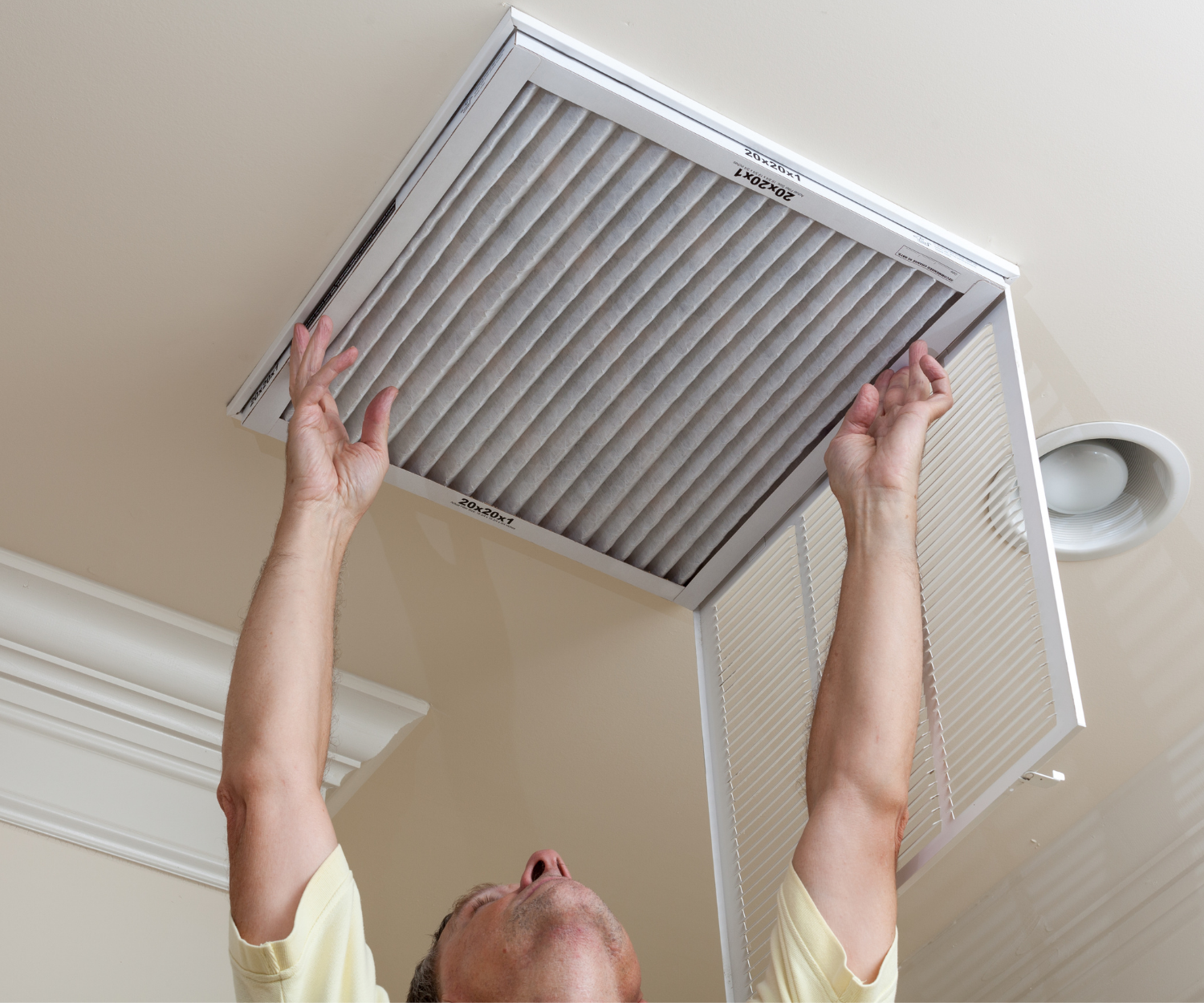
Signs Your New Mexico Air Filter Is Causing HVAC System Problems
Watch for these warning signs:
- AC blowing warm air
- Furnace short-cycling
- Higher utility bills
- Excess dust around vents
- Musty or stale smells
These issues often signal restricted airflow inside the HVAC system. When the filtration is clogged, the system cannot move air properly, which reduces efficiency and comfort.
Ignoring the problem can strain heating equipment and cooling components. If you notice these signs, schedule service online or call our office for prompt support.
When to Upgrade Beyond Basic Air Filters for Better Air Quality
Sometimes replacing filters is not enough to create the clean air your family needs. In that case, whole-home filtration systems, media filters, or air purifiers may provide better long-term results.
We also install ERV and HRV systems that improve ventilation while reducing pollutants entering the home. Air sealing upgrades further limit dust intrusion through gaps in the building envelope.
Our team is dedicated to helping customers meet their indoor air quality goals today and into the future. Whether you need small adjustments or advanced equipment, we provide solutions backed by our 100% Satisfaction Guarantee and Final Price Guarantee.
Find the Right New Mexico Air Filter for Healthier Air and Reliable Comfort
The right New Mexico air filter protects both your air quality and your HVAC system. Choosing the proper MERV rating and replacing filters on schedule supports efficiency, reduces strain on heating equipment, and helps maintain clean air throughout your home.
Before peak summer heat arrives, take time to check your filter or schedule a professional evaluation. Our licensed, background-checked technicians are here to help homeowners across Albuquerque, Rio Rancho, Corrales, Bernalillo, Los Lunas, Edgewood, Santa Fe, and beyond.
Call (505) 859-4329, schedule service online, or ask about an indoor air quality consultation. At First Rate Plumbing Heating & Cooling, we deliver quality work and exuberant service on every visit.
Frequently Asked Questions
What MERV rating is best for a New Mexico air filter?
Most homes in New Mexico do well with a MERV 8 to MERV 11 air filter for everyday dust and pollen control. Homes with allergy concerns or smoke exposure may benefit from MERV 13, but only if the HVAC system can handle it. A professional can confirm the right balance between filtration and airflow.
How often should I change my air filter in Albuquerque or Rio Rancho?
In most cases, you should replace your air filter every 1–3 months. During heavy dust season or peak summer cooling months, you may need to check it more often. If it looks clogged or airflow feels weak, it is time to change it.
Can a higher MERV filter damage my HVAC system?
A higher MERV filter can restrict airflow if your system is not designed for it. Reduced airflow can strain components, lower efficiency, and lead to short-cycling. That is why it is important to match the filter rating to your specific equipment.
Do air purifiers improve indoor air quality during the dust season in New Mexico?
Yes, whole-home air purifiers and upgraded filtration systems can significantly improve indoor air quality during dust and smoke events. They capture smaller particles that standard filters may miss. These systems are especially helpful for homes with allergies or respiratory sensitivities.
How do I get in touch with First Rate Plumbing Heating & Cooling?
You can call First Rate Plumbing Heating & Cooling at (505) 859-4329 during business hours. You can also schedule service or request an estimate through the website. Our licensed, background-checked technicians are ready to help with your indoor air quality and HVAC needs.

