
Gas Leak in a Building: What to Do Immediately and What Happens Next
A gas leak in a building is a serious safety concern that requires immediate action. Whether in a house, office, or commercial space, natural gas can create a dangerous environment if a leak occurs and is not addressed quickly.
Common warning signs include the smell of rotten eggs, a hissing sound near gas appliances, or physical symptoms like dizziness. When you smell natural gas or suspect a natural gas leak, safety comes first.
This guide explains what to do immediately and what happens next so your system can be inspected, repaired, and safely returned to operation.
Signs of a Gas Leak in a Building
Recognizing the signs of a gas leak in building environments can prevent fire, explosion, or other hazardous conditions. In its natural state, natural gas has no smell. Utility providers add an odorant called mercaptan so it produces a sulfur or rotten eggs odor that helps people identify signs of a leak.
Smell of Sulfur or Rotten Eggs
If you smell gas that resembles sulfur or rotten eggs, treat it seriously. That odor is intentionally added so you can detect a natural gas leak quickly.
If you smell natural gas inside your building, immediately take action rather than waiting to see if it fades.
Hissing Sounds Near Gas Lines or Appliances
A hissing sound near a gas line, pipe, gas furnace, furnaces, boilers, or water heaters may signal gas escaping under pressure. When a gas leak occurs at a fitting or damaged section of pipe, the escaping gas can create a noticeable sound.
Any unusual noise near heating equipment or appliances should be inspected.
Physical Symptoms and Carbon Monoxide Concerns
Exposure to gas can affect health. Headaches, dizziness, nausea, or fatigue may occur if gas is present in the air inside a building.
Carbon monoxide is especially dangerous because it has no smell and can displace oxygen, making it difficult to detect without proper equipment. Carbon monoxide detectors are critical in buildings with gas appliances, including furnaces and boilers, to support natural gas safety.
For more detailed prevention guidance, review the carbon monoxide safety recommendations from the New Mexico Gas Company.
Outdoor and Other Signs
Other signs of a leak include dying vegetation above a buried gas line, bubbling in standing water, or loose dirt near the ground. These outdoor clues can indicate a damaged underground pipe. You may also notice irregular flames on appliances or pilot lights that will not operate correctly.
If you suspect a problem, First Rate Plumbing Heating & Cooling can inspect your gas line and related systems to identify the source safely and accurately. Our licensed team provides professional testing and repair through our commercial plumbing services to help restore safe operation.
What to Do Immediately If You Suspect a Gas Leak (Natural Gas Safety First)
When you suspect a gas leak in building spaces, act quickly and calmly. Do not try to determine the exact source before taking protective steps.
Evacuate the Building Immediately
Leave the building immediately and move everyone outside, including employees, workers, or family members. If it is safe, leave windows open as you exit to help reduce gas concentration.
Move to a safe distance from the building and remain there. Do not reenter until emergency responders say it is safe.
Do NOT Use Electrical Switches or Devices
Do not touch light switches, electrical equipment, or cell phones inside the building. Even a small spark can create ignition when gas mixes with air.
Avoid open flames, smoking, or operating vehicles nearby. Flames or engine ignition can create a fire hazard if gas is present.
Call 911 or Your Gas Utility From a Safe Distance
Once outside and at a safe distance, call 911 or contact your gas company. Emergency responders and the fire department are trained to manage hazardous gas situations.
The New Mexico Gas Company may shut off gas service at the shutoff valve to stop the flow. Follow all instructions carefully.
Do Not Attempt DIY Gas Repairs
Never attempt to tighten a valve, repair a gas line, or restart appliances on your own. Gas systems require licensed professionals with proper testing equipment to determine where the leak occurred.
Improper repair attempts can create additional risk and increase the chance of explosion or fire. Safety must always come first.
For more information about carbon monoxide exposure and related health concerns, review guidance from the CDC’s carbon monoxide safety page.
What Happens After Emergency Response
After emergency responders assess the situation, they will determine whether a natural gas leak is present. The fire department or gas company may shut gas service to the building to prevent further hazards.
You may not be allowed to reenter the building until the area is declared safe. Once cleared, a licensed contractor will inspect the gas line, fittings, and connected equipment.
Gas service will remain shut until necessary repair work is completed and verified. This ensures gas appliances such as furnaces, boilers, and water heaters can operate safely without ongoing risk.
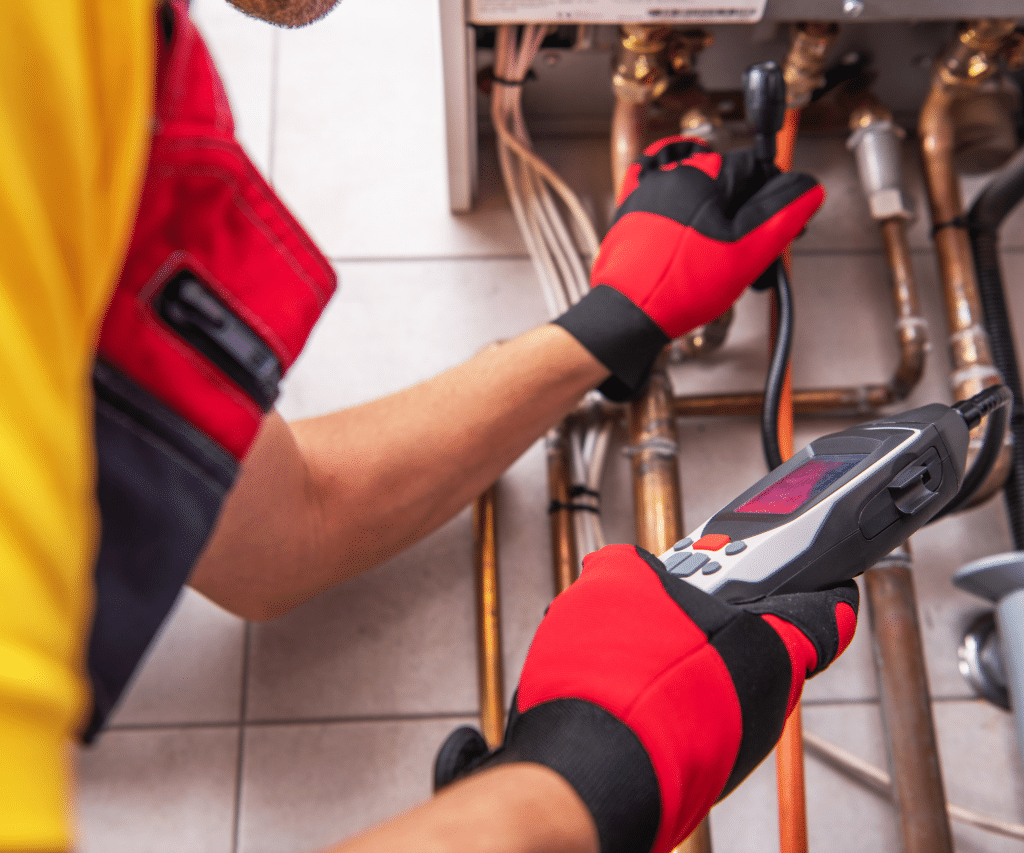
Professional Gas Leak Testing and Repair Process
After the immediate danger is addressed, a detailed inspection helps determine why the gas leak occurred and what repairs are required.
System Pressure Testing
Technicians perform pressure testing to determine if the gas line holds pressure properly. A pressure drop confirms a leak is still present somewhere in the system.
This testing helps determine the scope of repair and whether sections of pipe need replacement.
Electronic Gas Detection Equipment
Electronic detection tools are used to pinpoint the exact leak location, whether behind walls, near equipment, or underground. Accurate detection prevents unnecessary disruption to your building.
This approach allows technicians to inspect efficiently and safely.
Code-Compliant Gas Line Repair or Replacement
Damaged pipes or fittings are repaired or replaced using approved materials installed to code in New Mexico. Secure connections reduce the chance of future leaks.
All equipment must operate safely after repair, including heating systems and gas appliances.
Post-Repair Verification and Safety Check
After repairs, the system is retested to confirm the leak has been resolved. Technicians verify that appliances operate properly and that no hazardous gas remains present.
If repairs are required, First Rate Plumbing Heating & Cooling can inspect the system and complete necessary work according to current safety codes.
Why a Post-Incident Gas Inspection Matters in New Mexico
A gas leak can indicate aging pipes, corrosion, or improper installation. In New Mexico, seasonal ground movement and temperature changes can stress underground gas lines.
Over time, shifting ground or settling dirt may lead to small leaks that create risk if not addressed. A thorough inspection helps prevent future hazards and supports long-term natural gas safety.
Routine inspection also helps determine whether additional updates are needed to maintain safe operation.
Gas Leak Inspection and Repair in Albuquerque, NM
If you suspect a gas leak in a building, a professional inspection is essential before restoring gas service. Proper testing ensures safety, code compliance, and reliable appliance operation.
First Rate Plumbing Heating & Cooling serves Albuquerque, Rio Rancho, Corrales, Bernalillo, Los Lunas, Edgewood, Santa Fe, and surrounding areas in New Mexico. Call (505) 859-4329 to request an inspection or schedule a service online.
Our team focuses on safe, thorough repair and verification so your home or business can move forward confidently.
Frequently Asked Questions
What should I do first if I suspect a gas leak in a building?
If you suspect a gas leak in a building, evacuate immediately and move to a safe distance. Do not use light switches, cell phones, or anything that could create a spark. Once outside, contact 911 or your gas company to report the possible natural gas leak.
Can I try to fix a gas leak myself?
No. A gas leak should never be handled as a DIY repair. Natural gas systems require licensed professionals with proper equipment to inspect the gas line, determine where the leak occurred, and complete safe, code-compliant repairs.
How long does it take to restore gas service after a leak?
Gas service is restored only after the gas line has been inspected, repaired, and tested. The timeline depends on the severity of the natural gas leak and whether parts of the pipe need replacement. Safety verification always comes before turning gas back on.
What causes gas leaks in residential buildings?
A gas leak can occur due to aging pipes, corrosion, loose fittings, or ground movement in New Mexico. Malfunctioning gas appliances, such as a gas furnace, boilers, or water heaters, may also contribute. Regular inspection helps reduce long-term risk.
Should I schedule an inspection even if the utility shuts the gas off?
Yes. Even if the gas company shuts off gas service at the shutoff valve, a licensed inspection is still necessary. A professional can inspect the system, confirm repairs, and ensure natural gas safety before appliances operate again.
How do I get in touch with First Rate Plumbing Heating & Cooling?
If you need inspection or repair after a gas leak, you can call First Rate Plumbing Heating & Cooling at (505) 859-4329. You can also request service online to schedule a licensed technician to inspect your gas line and appliances.

