
Types of AC Systems for Buildings: Options and Maintenance Needs
Choosing the right AC systems for buildings directly impacts comfort, uptime, and long-term operating costs. In commercial buildings, even small inefficiencies in an air conditioning system can lead to higher energy bills and reduced occupant comfort.
The type of commercial HVAC systems you install also determines how often you’ll need regular maintenance and when replacement becomes necessary. In Albuquerque’s dry, high-demand cooling season, system performance and energy efficiency matter even more.
This guide breaks down common commercial air conditioners, how they function in different commercial spaces, and what preventative maintenance and lifecycle planning should look like.
Why System Selection Matters for Commercial Buildings and Energy Efficiency
Not all HVAC systems are built the same, and the right system depends heavily on your building’s layout, square footage, and usage. A mismatch can reduce energy efficiency and lead to uneven temperature control.
For example, a system that works in small commercial spaces may struggle in large buildings or shopping centers. Poor sizing or design can increase repair frequency and shorten system lifespan.
Over time, the true cost of commercial HVAC extends beyond upfront equipment and includes ongoing energy use and system performance. According to the U.S. Department of Energy, heating and cooling account for a significant share of building energy consumption, and improving system efficiency can help reduce long-term operating costs.
If you’re evaluating options, working with a local expert through a commercial air conditioning service like First Rate PHC ensures your system is tailored to your building’s needs.
Common Types of AC Systems for Buildings and Climate Control
Packaged Rooftop Units (RTUs)
Rooftop units are one of the most common commercial HVAC systems used in office buildings, retail stores, and small commercial properties. These all-in-one rooftop systems handle both heating and cooling, often powered by electricity or natural gas.
They offer easy installation and free up indoor space, making them ideal for many commercial buildings. However, because they are exposed to outside air and weather, they require consistent maintenance to maintain optimal performance.
Routine service includes:
- Replacing air filters
- Cleaning coils
- Checking refrigerant levels
- Inspecting rooftop components
ASHRAE emphasizes that proper HVAC system maintenance supports good indoor air quality and can also help reduce energy use as part of an integrated building performance strategy.
Split Systems
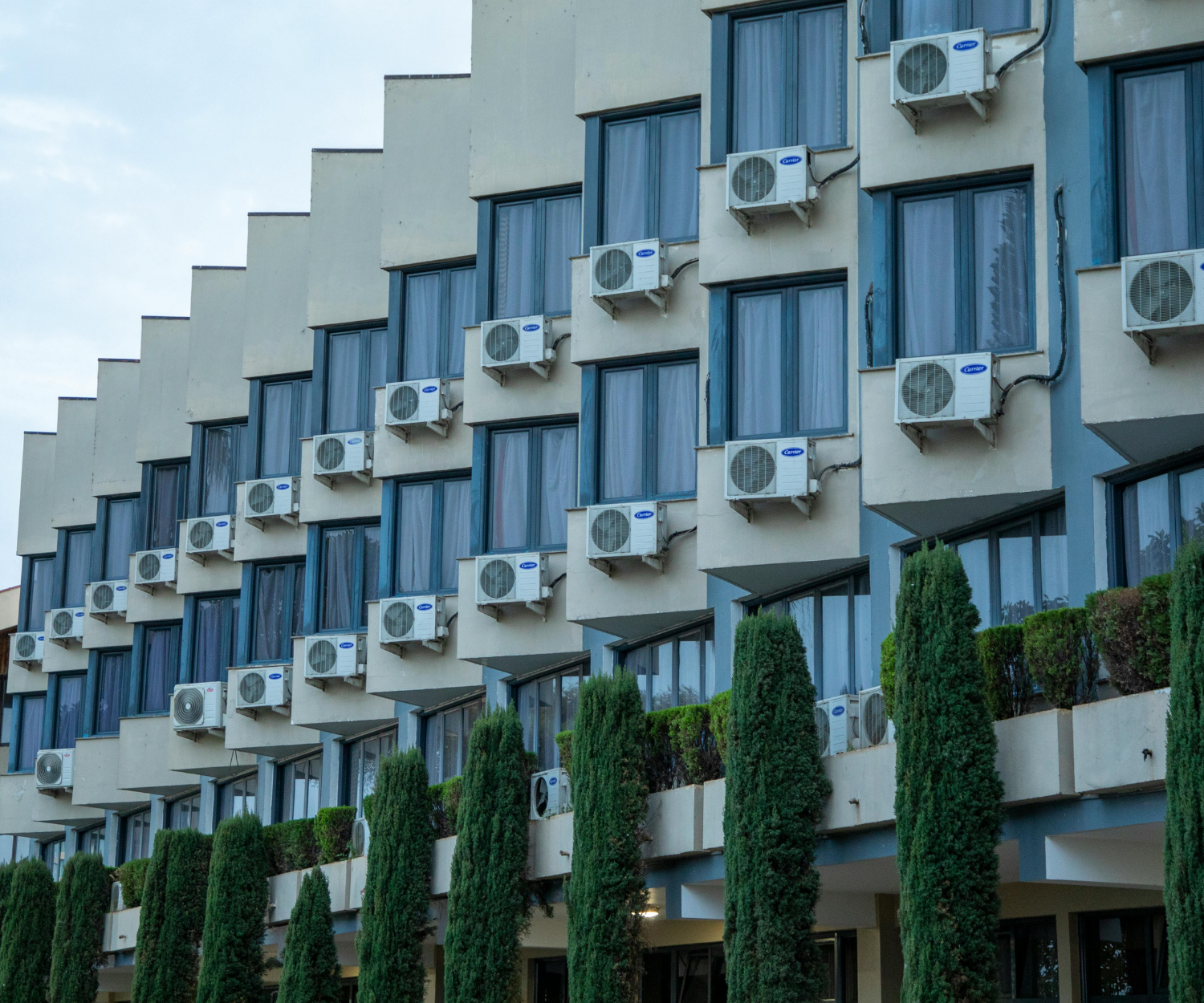
Split systems separate the indoor air handler from the outdoor condenser. These air conditioning systems are common in small commercial spaces and buildings with flexible installation needs.
They provide reliable temperature control and are often more cost-effective upfront. However, they require indoor space and proper ductwork for air circulation.
Maintenance focuses on:
- Monitoring refrigerant levels
- Inspecting ventilation systems
- Ensuring balanced air flow
Variable Refrigerant Flow (VRF) Systems
Variable refrigerant flow systems use advanced technology to deliver precise climate control across different zones. These systems allow for individual temperature control in different areas of a commercial space.
VRF systems are highly energy efficient and known for quiet operation and energy savings. Because of their complexity, VRF systems require specialized service from a trained HVAC professional to maintain optimal performance.
Chilled Water Systems
Chilled water systems are commonly used in large-scale facilities like hospitals, campuses, and manufacturing facilities. These systems cool water centrally and distribute it throughout the building for cooling.
They are ideal for large buildings and provide powerful performance for large spaces. However, they require continuous monitoring, water treatment, and professional servicing to maintain efficiency.
These systems are often part of larger commercial HVAC setups that include ventilation systems and make-up air components to maintain indoor air quality.
Ductless/Mini-Split Systems
Ductless systems are a flexible option for additions, server rooms, or areas with zoning challenges. These systems offer easy installation and precise temperature control without requiring extensive ductwork.
They are energy efficient and ideal for targeted cooling in specific zones. Routine maintenance includes cleaning air filters and checking system performance.
Preventative Maintenance (PM) for Commercial HVAC Systems
Preventative maintenance is essential for keeping commercial air conditioning systems running efficiently. Without regular maintenance, systems lose efficiency, leading to higher energy bills and reduced occupant comfort.
Typical PM tasks include:
- Replacing air filters
- Cleaning coils
- Inspecting electrical components
- Checking refrigerant levels
Seasonal tune-ups are especially important in Albuquerque’s local climate, where cooling systems operate heavily during peak months.
Planning for Repair vs. Replacement of Commercial Air Conditioners
Every air conditioning system has a finite lifespan. Most systems last 10–15 years, depending on usage and maintenance.
Signs it may be time to replace include:
- Frequent breakdowns
- Rising energy costs
- Reduced cooling performance
In many cases, ongoing repairs can outweigh the cost of installing a new, energy-efficient system. Newer systems with high SEER ratings and improved technology can reduce energy costs and improve indoor air quality.
Planning ahead allows commercial properties to budget for upgrades and avoid unexpected downtime. Scheduling a consultation through a request estimate page can help you evaluate your options.
Choosing the Right Commercial HVAC System for Your Building
Selecting the right system depends on several factors, including building size, ceiling height, occupancy patterns, and ventilation needs.
A single system may work for small commercial spaces, while larger facilities often require multiple systems or zoning for precise climate control. Consider how your building uses heating and cooling, and whether you need systems that provide heating and cooling together.
Working with an experienced HVAC professional ensures accurate load calculations and system design. The right system improves efficiency, reduces costs, and creates a comfortable environment for occupants.
Schedule a Commercial AC System Walk-Through in Albuquerque
If you’re unsure whether your current system is delivering optimal performance, a professional walk-through can help. Evaluating your existing AC systems for buildings allows you to identify inefficiencies and plan upgrades.
During a site visit, you can:
- Assess system condition and performance
- Identify opportunities to improve efficiency
- Plan maintenance or replacement timelines
First Rate Plumbing Heating & Cooling provides licensed, background-checked technicians and transparent recommendations backed by a final price guarantee. To get started, schedule a walk-through, call (505) 859-4329, or request an estimate online. Service is available across Albuquerque, Rio Rancho, and surrounding areas.
Frequently Asked Questions
What type of AC system is best for a commercial building?
The best option depends on your building’s size, layout, and usage. Rooftop units work well for many small to mid-sized commercial buildings, while variable refrigerant flow systems are ideal for properties that need precise temperature control across different zones.
Larger facilities may benefit from chilled water systems. A professional evaluation helps determine the right system for your specific commercial space.
How often should commercial AC systems be serviced?
Most commercial HVAC systems should receive regular maintenance at least twice a year, typically before peak cooling and heating seasons. Buildings with high usage or specialized needs, like manufacturing facilities or server rooms, may require more frequent service to maintain optimal performance and indoor air quality.
What are the signs a commercial AC system needs replacement?
Common signs include frequent breakdowns, rising energy bills, uneven cooling, and difficulty maintaining temperature control. If your system is over 10–15 years old and requires frequent repairs, replacing it with a more energy-efficient system may help reduce costs and improve reliability.
How long do different types of AC systems for buildings typically last?
Lifespan varies by system type and maintenance level. Rooftop units and split systems typically last 10–15 years, while larger systems like chillers can last 20+ years with proper care. Consistent preventative maintenance plays a major role in extending the life of any air conditioning system.
What’s the best way to connect with First Rate Plumbing Heating & Cooling for a professional assessment?
The easiest way to get started is by scheduling a commercial AC system walk-through. You can call (505) 859-4329 or request an estimate online to connect with the First Rate Plumbing Heating & Cooling team. A site visit allows you to get clear recommendations, understand your options, and plan next steps with confidence.

