
4 Types of Air Conditioning Systems: Pros, Cons, and Best-Fit Homes
There is no single “best” air conditioner. The right AC system depends on your home’s design, existing ductwork, comfort priorities, and how systems perform in New Mexico conditions. Long cooling seasons, strong sun exposure, dry air, and a mix of older and newer homes make system fit more important than brand names.
According to the U.S. Department of Energy’s overview of types of air conditioning systems, understanding system design is the first step toward reliable cooling. For local insight, homeowners often turn to First Rate Plumbing Heating & Cooling for professional guidance.
In this guide, I’ll explain the four common types of air conditioning systems, how they work, and which homes they tend to serve best.
1. Split Central Air Conditioning Systems
A split system is one of the most common central air conditioning systems in use today. It uses two units: an outdoor AC unit with condenser coils and an indoor air handler or furnace containing the evaporator coil. Refrigerant tubing connects the two units to remove heat and deliver cooled air.
Many New Mexico homes already have ductwork, which makes a central AC system a practical upgrade. Conditioned air is distributed through supply registers to cool the entire home evenly.
Pros
- Consistent whole-home cooling
- Broad range of energy efficient models
- Works with both furnaces and heat pump system designs
Cons
- Requires sealed, properly sized ductwork
- Leaky ducts can reduce cooling capacity and indoor air comfort
Best-Fit Homes
- Homes with existing ducts
- Larger single-family residences
- Homeowners seeking even central air conditioning
For homes with ducts in place, central air remains a reliable cooling system. Learn more about our professional installation, repair, and maintenance through air conditioning services.
2. Packaged Air Conditioning Systems
A packaged air conditioning unit contains all major components in a single outdoor cabinet. The outdoor compressor, condenser coils, evaporator coil, and air handler are housed together. These systems are often installed on rooftops or on concrete pads next to the home.
Packaged systems are most common in homes with limited indoor mechanical space. They are also frequently used in commercial buildings and some manufactured homes.
Pros
- Compact indoor footprint
- Simplified access for annual maintenance
Cons
- Often less energy efficient than comparable split systems
- Outdoor exposure can affect cooling equipment lifespan
Best-Fit Homes
- Homes without basements or utility rooms
- Properties designed for rooftop or exterior installation
In New Mexico, roof-mounted systems must handle strong sun and outdoor temperature swings. Proper professional installation helps ensure optimal performance when outdoor temperature rises during peak cooling months.
3. Ductless Mini-Split Systems
Ductless mini split systems provide cooling without ductwork. An outdoor compressor connects to one or more indoor units mounted on walls or ceilings. These indoor air units deliver cooled air directly into specific spaces.
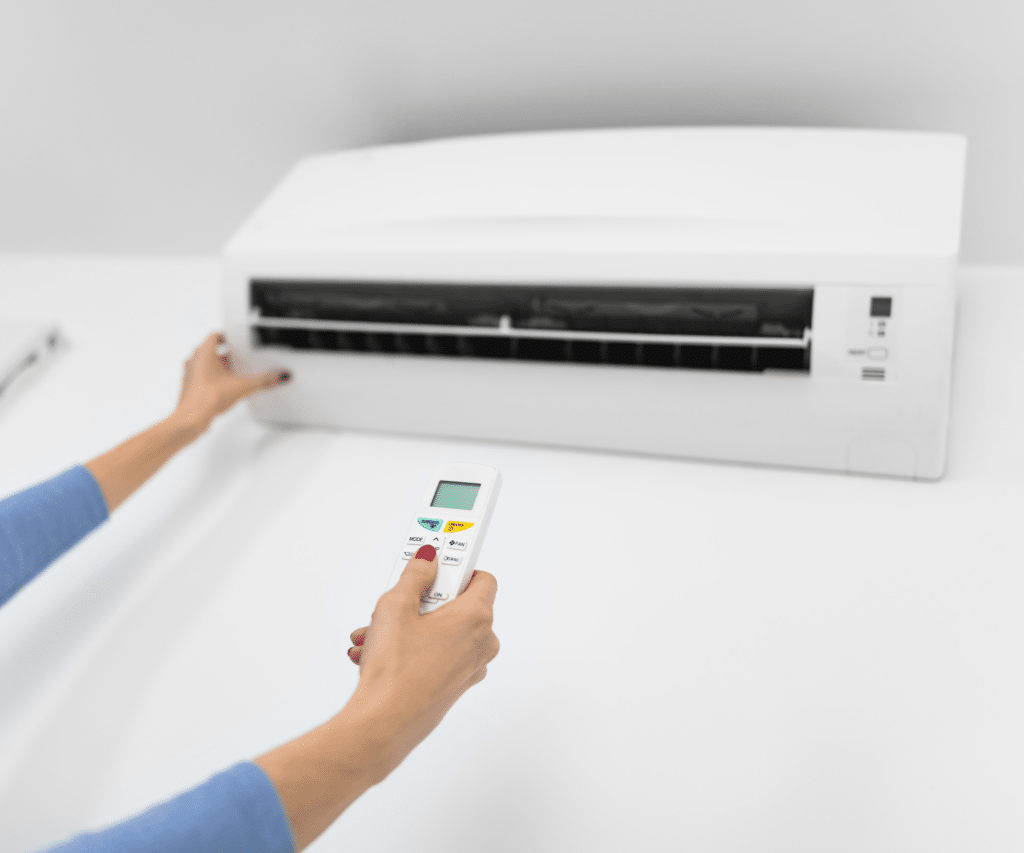
Homeowners usually choose ductless air conditioners for flexibility. A ductless mini system allows zoned control, so each room can reach its desired temperature independently using a remote control or smart air conditioner features.
Pros
- High energy efficiency
- No duct losses
- Quiet operation with precise temperature control
Cons
- Higher upfront cost per zone
- Indoor units remain visible
Best-Fit Homes
- Older homes without ductwork
- Room additions, casitas, or converted garages
- Homes needing cooling for one room rather than the entire home
According to the DOE’s guidance on ductless mini-split air conditioners, these systems are effective in dry climates and homes with targeted cooling needs. Ductless and mini-split options are available through First Rate Plumbing & Heating.
4. Heat Pump–Based Cooling Systems
A heat pump is a versatile HVAC system that can provide cooling and heating. During summer, the heat pump system removes heat from indoor air and transfers it outside. When the outdoor temperature drops, it reverses operation to provide heating.
Heat pumps are gaining popularity because they offer both heating and cooling in one system. They do not rely on natural gas and instead move heat using electricity.
Pros
- Energy-efficient cooling during hot months
- Provides cooling and heating without combustion
- Compatible with some efficiency incentives
Cons
- Higher upfront investment
- Requires accurate load calculation and system design
Best-Fit Homes
- Homes focused on energy efficiency
- Properties without natural gas service
- Homeowners planning long-term HVAC upgrades
If you’re considering a heat pump for efficient cooling and heating, First Rate Plumbing Heating & Cooling offers professional you can rely on.
How to Choose the Right AC System for Your Home
Choosing among types of air conditioners involves more than comparing equipment. The most important factors include square footage, home layout, existing ductwork, insulation, and long-term cooling needs.
Proper sizing is critical. An oversized unit can short-cycle, wasting energy and failing to manage indoor air properly. An undersized system may struggle to remove heat during peak summer cooling.
Professional evaluation matters. HVAC technicians perform load calculations, inspect ducts, and review cooling equipment options. According to the U.S. Department of Energy, proper system selection should always go hand in hand with professional installation to support energy efficiency and comfort.
Get the Right AC System, Not Just a Popular One
Each type of AC system has strengths and limitations. Traditional AC units, ductless mini split systems, heat pump systems, and packaged designs all serve different homes and lifestyles.
The best air conditioning system is the one matched to how your home is built and how you actually use it. If you are replacing an older unit or comparing new options, a professional sizing and system consultation can help prevent comfort issues and unnecessary costs.
To explore your options, schedule service using our contact form or call 505-859-4329 to speak directly with our team. We’re happy to help you find the right cooling solution for your home.
Frequently Asked Questions
What are the main types of AC systems?
The main types of AC systems for buildings include central air conditioning systems, ductless mini split systems, packaged air conditioning units, and heat pump systems. Some homes also use window air conditioners or a portable air conditioner for one-room or temporary cooling.
Each air conditioning system removes heat differently and is designed for specific square footage and cooling needs. The best option depends on whether you want to cool one room or your entire home.
Is central air or ductless better in New Mexico?
Central air conditioning is a strong choice for cooling the entire home when ductwork is already in place. Ductless air conditioners, including ductless mini split systems, work well for older homes, additions, or spaces without ducts.
In dry climates like New Mexico, ductless systems also offer zoned control for different cooling needs. The right choice depends on home layout, comfort goals, and budget.
Are heat pumps effective for cooling?
Yes, a heat pump is an energy-efficient cooling system that removes heat from indoor air. A heat pump system works like a traditional air conditioner in summer and can also provide heating when the outdoor temperature drops.
Many homeowners choose heat pumps because they offer both heating and cooling in one HVAC system. Proper sizing and professional installation are essential for reliable performance.
Can I change AC system types without replacing ductwork?
Sometimes. Switching between central AC systems usually requires existing ductwork to be sealed and properly sized. Ductless mini split systems allow homeowners to change AC system types without installing ducts at all. Window units and portable air units can also provide cooling, but they are best for one room or temporary use.
How do I know what size AC system I need?
AC sizing depends on square footage, insulation, window placement, and overall cooling needs. An oversized unit can short-cycle, waste energy, and reduce comfort. An undersized cooling system may struggle to maintain the desired temperature during peak heat. HVAC technicians use a load calculation to determine the correct cooling capacity.
How do I schedule AC service with First Rate Plumbing Heating & Cooling?
Scheduling AC service is simple. You can call 505-859-4329 to speak with the office team and book an appointment. You can also use the online Schedule Service form at any time. A licensed technician will evaluate your air conditioning system and cooling needs before recommending next steps.

