
Sump Pump Installation Mistakes to Avoid in Albuquerque Homes
In Albuquerque, summer storms can dump heavy rain fast. When the ground cannot absorb it quickly, excess water can collect near a home’s foundation and work its way toward a basement, crawl space, or low-lying area.
A sump pump can help manage rising water and pump water out before it turns into water damage. That protection depends on a correct sump pump installation, including where the sump pump sits, how the discharge pipe is routed, and what happens during power outages.
In this guide, I’ll cover the big four sump pump installation mistakes I see most often: wrong sizing, poor placement, improper discharge, and no backup power plan. If you need help from licensed professionals, our team at First Rate Plumbing Heating and Cooling can evaluate your setup.
Mistake #1: Wrong Pump Sizing (Bigger Isn’t Always Better)
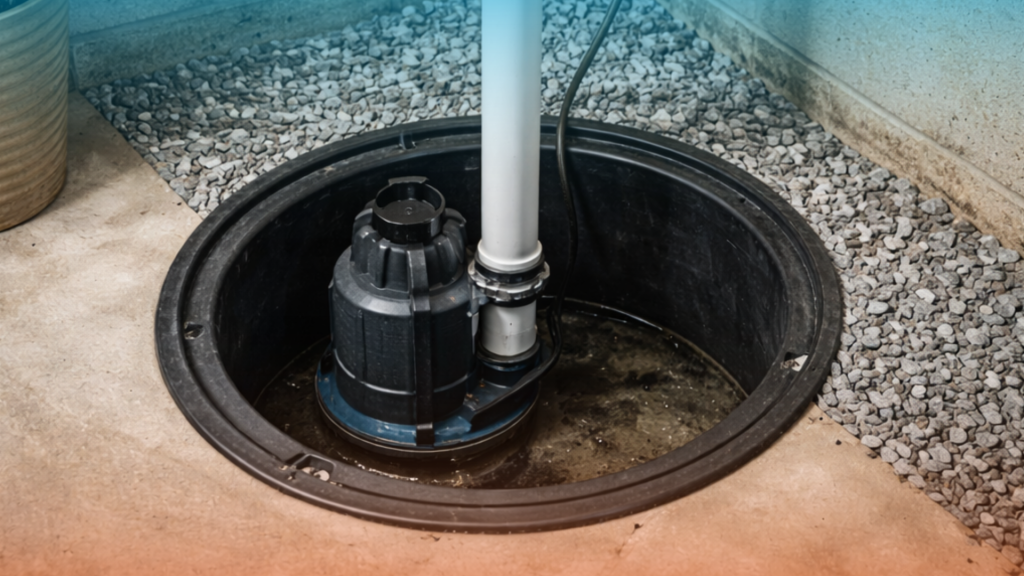
A lot of homeowners compare pumps by horsepower alone. In real pump installation work, a sump pump’s performance depends on how high it must lift water and how far the discharge line runs before it exits the home. Most new sump pumps include a chart or graph showing flow versus height of lift, often listed as gallons per minute or gallons per hour.
That matters in Albuquerque because discharge routing changes the lift. A short run that exits at grade can behave very differently from a discharge pipe that must run up and out to an exterior wall. A properly sized water-moving unit starts with the manufacturer chart.
“1/3 HP vs 1/2 HP” Without Considering Your Actual Conditions
NDSU explains there is no single “correct” size and that a 1/3 horsepower pump is satisfactory for most houses, while a 1/2 horsepower pump can help in situations where water flow into the sump becomes quite rapid.
A professional plumber ties the pump choice to peak inflow, the discharge line route, and the height of lift. That’s how you avoid a malfunctioning sump pump during heavy rainfall and avoid spending more on a larger unit that does not improve reliability.
Oversizing That Causes Unnecessary Cycling and Wear
If excess water enters the sump pit slowly, a bigger pump may offer no advantage. In slow-flow situations, you would have no advantage using the larger pump.
Depending on the float switch settings and pit volume, an oversized pump can cause the pump to turn on and off more than needed. That kind of frequent cycling can lead to costly repairs and early replacement.
Mistake #2: Poor Placement (Sump Pit, Float Switch, and Base Issues)

A good sump pump installation starts with the basics: a stable pit, a free-moving float, and a clean base that supports the system. When any of these are wrong, the sump pump acts unreliably, even if the motor is brand new.
Placement mistakes also create common issues that show up later as electrical issues, a stuck switch, or a clogged intake from debris and other debris. These problems often look like an emergency sump pump repair call, even though the root cause is installation.
Installing in a Sump Pit That’s Too Small for the Float/Switch
The floating switches can require a larger diameter sump. If the sump diameter is less than 18 inches, the floating switch or its cord can become entangled with piping or pinned between the pump and sump.
That can create an “it worked once” install that fails when rising water hits. Whether you use a submersible sump pump or a pedestal sump pump, the float needs room to move in the right direction.
Setting the Liner/Base Wrong (Causes Instability and Poor Performance)
A stable base helps the sump pump sit level and run smoothly. Sump holes should be about 2 feet in diameter at the top, and about 3 to 4 inches of coarse gravel should be placed in the bottom to form a solid base that supports the weight of the pump.
Skipping the gravel base can cause the pump to tilt, vibrate, or shift over time. That instability can contribute to wear, noisy operation, and a higher chance the unit will clog.
Sharing the Outlet/Circuit With Other Loads
Power supply matters more than most homeowners think. A standard 15-amp, 110-volt grounded outlet is sufficient, but the electrical outlet for the sump pump should be an isolated line with no other connections between the breaker and the outlet.
When a sump pump shares a circuit with other loads, a simple plug-in device or tool can trip the breaker. That power failure can leave the system useless during a storm, even though the pump is fine.
Mistake #3: Improper Discharge Pipe Routing (Where Most Installs Fail)

Most sump pump installation mistakes show up at the discharge pipe. You can install a great sump pump system inside, but if the discharge line sends water back toward the home’s foundation, you will keep fighting water intrusion.
Discharge routing also affects preventive maintenance tips and routine checks. Before testing a sump pump, confirm the outlet is clear so water can flow freely.
Discharging Too Close to the Foundation (Creates a “Recycling Loop”)
If you discharge too close, water can percolate back toward the foundation, enter the drainage system, flow into the sump, and get pumped out again. SDSU describes this as a loop created by discharging the pump close to the house.
SDSU recommends discharging the sump pump at least 20 feet from the house when possible. In areas prone to flash floods or sudden pooling after heavy rain, that distance helps reduce repeat basement wetness and mold growth risk.
Connecting Discharge to a Floor Drain/Sanitary Sewer
This is a major red flag. Do not discharge the sump pump into the municipal sewer system. Ordinances in many cities prohibit it because it can overwhelm capacity and contribute to sewage backups.
NDSU also advises against pumping sump water into a sewer drain or basement floor drain, and recommends checking with municipal government rules where applicable. For Albuquerque homeowners, this becomes a compliance and safety issue.
Ignoring Frozen/Clogged Discharge Risks
Before you test the system, make sure the outlet pipe is not frozen shut or plugged and that it directs water away from the house. Check that the pump hose outlet is clear so water can flow freely.
Albuquerque temperature swings can create clogged or blocked discharge problems at the worst time. A plugged discharge line can force continuous operation, strain the motor, and increase the odds of the pump failing during heavy rainfall.
Mistake #4: No Backup Power Plan
A sump pump can be your first line of defense against water damage. It still needs a power source to work, and that is where many homeowners get caught off guard.
If a storm brings power outages, the main pump may stop while water keeps rising. A backup plan turns a high-stress moment into a manageable one.
Assuming the Pump Will Run When Storms Knock Out Power
Many standard systems stop immediately during a power outage. Ready.gov recommends planning for batteries and other alternative power sources to meet your needs when the power goes out.
In Albuquerque, a monsoon storm plus a power failure can create the perfect setup for a wet basement or crawl space. A backup battery plan helps protect your home when you cannot rely on the grid.
Skipping a Backup Pump/Battery Setup (Or Never Testing It)
Backup systems often use a battery backup approach. The most common configuration is a direct current DC pump supplied by batteries kept charged by a trickle charger connected to house power, and that the backup float is positioned above the main float so it kicks in when the main pump fails or electrical power is lost.
A pro can set the switch levels, confirm the check valve is correct, and show you a simple test routine. Check clogging, on-off switch action, and pump operation ahead of flood events.
Schedule Sump Pump Installation in Albuquerque
If you want to avoid sump pump installation mistakes, start with an on-site evaluation of sizing, sump pit fit, discharge pipe routing, and backup battery options. Most repeat problems come from discharge line errors, power outage planning, or a float switch that was never given room to work.
First Rate Plumbing Heating and Cooling offers licensed, background-checked sump pump service backed by our Final Price Guarantee and 100% Satisfaction Guarantee. Call 505-859-4329 to schedule, or book online. Our hours are Mon–Fri 7:30 AM – 5:00 PM.
Frequently Asked Questions
What size sump pump do I need for my home?
It depends on the inflow rate, drainage area, and height of lift. NDSU notes there is no “correct” size and recommends using the flow versus lift chart on most pumps.
How far from the house should a sump pump discharge?
It is recommended to discharge at least 20 feet from the house when possible to reduce recirculation back to the foundation.
Is it legal to drain a sump pump into the sewer?
Often no. SDSU notes that ordinances in many cities prohibit discharge into the municipal sewer system due to overload and backup risk.
Do I need a battery backup for my sump pump?
If you want protection during a power failure, a battery backup is a smart upgrade. Common DC backup pumps are supplied by batteries, and Ready.gov recommends planning for batteries and alternative power sources during outages.
How do I get in touch with First Rate Plumbing Heating & Cooling?
You can call (505) 859-4329 to speak with the office team, schedule service, or request an estimate. You can also book online through the Schedule Service or Request an Estimate forms on the First Rate Plumbing Heating & Cooling website. Emergency service is available 24/7.

