
Spring start-up is the ideal time to identify rooftop unit problems before the first long cooling run of the season. For facility managers, building maintenance teams, and small-business owners, a structured rooftop unit preventive maintenance checklist can help reduce downtime, comfort complaints, rising energy costs, and avoidable emergency calls.
In New Mexico, rooftop units face unique challenges. Windblown dust, roof exposure, fast seasonal temperature swings, and long cooling periods can all affect HVAC equipment performance.
A thorough spring inspection should focus on airflow, electrical reliability, coils, controls, refrigerant performance, and economizer operation. While this checklist can help facility teams prepare, many tasks require trained technicians.
For safety, performance verification, and accurate diagnostics, schedule a professional preventive maintenance visit before cooling season begins.
Why Spring Start-Up Matters for Rooftop Units
A rooftop unit is exposed to weather, debris, dust, and changing roof conditions year-round. Even if the HVAC system appeared to operate normally during winter, small problems can develop unnoticed and become major issues once cooling demand increases.
Spring preventive maintenance gives facility managers an opportunity to inspect the system before summer temperatures arrive. A quality start-up should verify that the unit is safe, clean, draining properly, moving sufficient airflow, and responding correctly to controls and thermostat settings.
For example, a small retail store or restaurant in Albuquerque may not notice airflow issues during mild weather. Once temperatures climb, those same issues can lead to comfort complaints, reduced indoor air quality, and unnecessary strain on the cooling system. Downtime impacts employees, customers, tenants, and overall business operations.
Safety and Roof Access Checks Before Opening the Unit
Every maintenance checklist should begin with safety. Before opening any rooftop unit, verify safe roof access and identify potential hazards.
Key items to inspect include:
- Roof access ladders and hatches
- Standing water near equipment
- Damaged curbs or roof penetrations
- Loose access panels
- Roof membrane concerns around the unit
- Potential fall-risk areas
Facility teams can report visible concerns before the service visit. However, high-voltage electrical components, lockout/tagout procedures, and internal inspections should be handled by qualified technicians.
Professional commercial HVAC technicians should confirm disconnect locations, follow proper lockout/tagout procedures, inspect safety controls, and verify safe start-up procedures before servicing HVAC parts inside the cabinet.
Airflow Checklist: Filters, Belts, Blowers, and Dampers
Airflow issues are among the most common causes of poor rooftop unit maintenance performance. A spring HVAC maintenance checklist should include a thorough review of filters, blower components, belts, dampers, and ductwork.
Start with air filters. Verify proper filter size, fit, installation direction, and service interval. New Mexico's spring winds can quickly load filters with dust and debris, reducing airflow and increasing energy consumption. Dirty filters also affect indoor air quality and system efficiency.
Next, inspect belts and blower assemblies. Look for:
- Cracking
- Fraying
- Glazing
- Misalignment
- Improper tension
Technicians should also inspect blower wheels, motors, moving parts, and overall airflow performance.
If occupants report weak airflow, uneven temperatures, or hot zones within a building, the issue may involve dirty filters, blower problems, belt wear, or duct restrictions. Outdoor air dampers, return air dampers, and economizer components should also be checked as part of the airflow path.
For example, if one area of an Albuquerque office remains warm while the rest of the building is comfortable, the solution may involve airflow corrections rather than simply adjusting thermostat settings.
Routine filter inspections and airflow verification are key parts of the ENERGY STAR HVAC maintenance checklist, helping maintain system efficiency and peak performance.
Coil and Condensate Checklist: Clean Heat Transfer, Clear Drainage
Clean coils are essential for efficient heat transfer. During spring inspections, technicians should examine both the evaporator coil and condenser coil for signs of contamination.
Common issues include:
- Dust buildup
- Leaves and debris
- Cottonwood accumulation
- Dirty coils
- Bent fins
- Restricted airflow through coil surfaces
Dirty coils reduce system performance and force equipment to work harder. Over time, this can increase energy costs and place additional stress on the compressor and cooling system.
Condensate components should also be inspected. Important tasks include:
- Checking the drain pan condition
- Inspecting drain lines
- Looking for algae or sludge buildup
- Identifying standing water
- Verifying proper drainage
Blocked drain lines can lead to water damage, ceiling stains, or nuisance shutdowns.
After windy spring conditions in New Mexico, rooftop coils often collect dust rapidly. A coil cleaning performed during spring start-up can help maintain efficiency and prevent cooling problems during the first major heat wave.
Electrical and Controls Checklist: Catch Small Failures Early
Electrical inspections are one of the most valuable parts of a professional rooftop unit preventive maintenance checklist.
Technicians should inspect:
- Contactors
- Relays
- Capacitors
- Disconnects
- Wiring
- Electrical components
- Electrical connections
During service, technicians may tighten all electrical connections where appropriate and verify safe operation. Even minor electrical wear can eventually result in system failure during high-demand cooling periods.
Controls should also be evaluated. This includes checking thermostat settings, building automation controls, programmable thermostats, and overall unit operation.
Facility teams can help by reporting:
- Short cycling
- Nuisance trips
- Intermittent cooling
- Occupant complaints
- Unusual equipment behavior
A unit that fails to start, stage correctly, or shut down properly can waste energy and reduce comfort throughout commercial buildings.
For more information about diagnostics and repairs, learn more about our commercial HVAC service and troubleshooting.
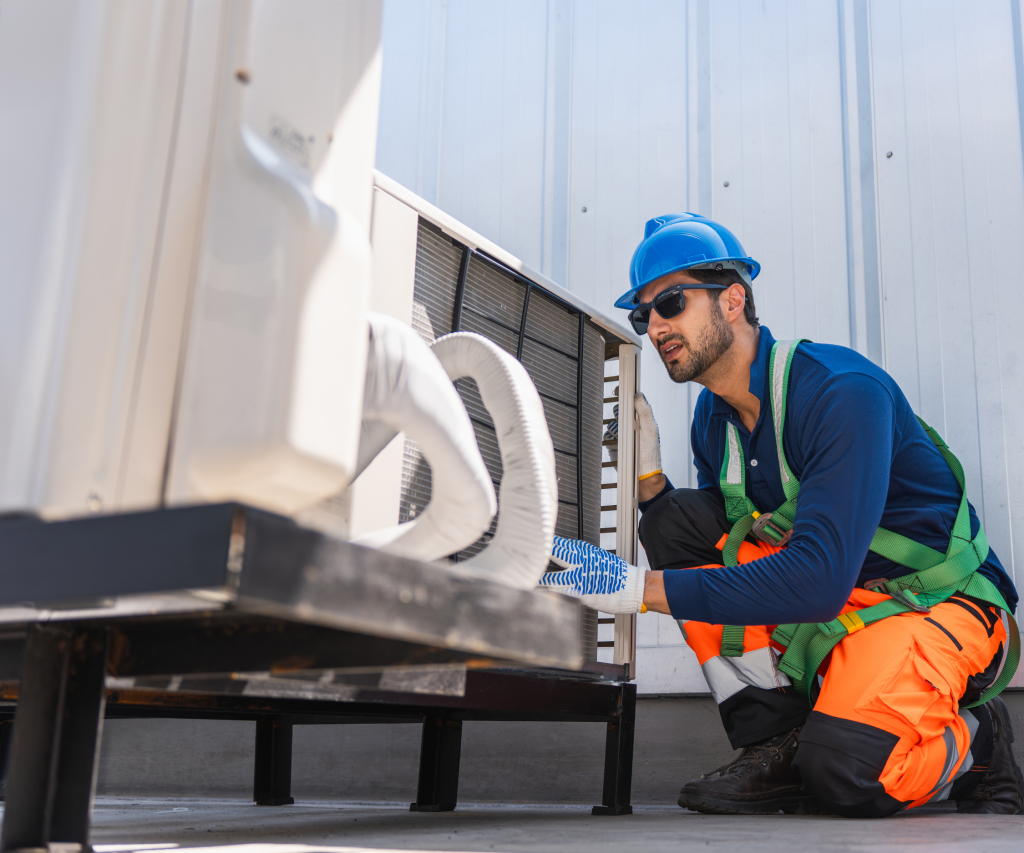
Refrigerant and Cooling Performance Checklist
A spring start-up should verify actual cooling performance rather than simply adding refrigerant.
Professional inspections typically include:
- Refrigerant circuit inspection
- Temperature split measurements
- Compressor performance testing
- Refrigerant pressure readings
- Amperage checks
- Visual inspection for refrigerant leaks
If technicians identify oil residue or signs of refrigerant loss, further investigation may be necessary. Low refrigerant generally indicates a leak or another system issue. Simply topping off refrigerant is rarely a long-term solution.
A rooftop unit may appear to operate normally during April but struggle during June heat if airflow or refrigerant performance is already marginal.
Not all refrigerant leaks are easy to spot. Our guide, 5 Signs of a Refrigerant Leak and What to Do, explains some of the most common warning signs.
Economizer Checklist: Don’t Waste Free Cooling
Many commercial HVAC systems include economizers that provide free cooling when outdoor conditions are favorable.
During spring maintenance, technicians should inspect:
- Damper movement
- Actuator operation
- Sensor performance
- Linkages
- Calibration settings
Proper economizer operation helps reduce energy use while maintaining occupant comfort.
A stuck-open economizer can introduce unwanted dust, hot air, or moisture into the building. A stuck-closed economizer may prevent the system from taking advantage of cooler outdoor temperatures.
In New Mexico, mild spring mornings often create ideal conditions for economizer operation, making inspection an important part of rooftop unit maintenance.
Documentation Checklist: What Facility Teams Should Get After PM
A professional service visit should provide detailed documentation, not simply a note that the unit was inspected.
Recommended job details include:
- Filter condition reports
- Coil inspection findings
- Belt and blower observations
- Drain line condition
- Electrical readings
- Refrigerant performance data
- Photos of roof or equipment concerns
- Recommended repairs prioritized by urgency
Many facility teams now prefer digital forms that simplify tracking across multiple units and locations.
Good documentation supports budgeting decisions, future inspections, repair planning, and long-term preventive maintenance strategies.
At First Rate Plumbing Heating & Cooling, our service-first approach emphasizes clear communication, transparent pricing, and practical recommendations for every facility.
Schedule RTU Spring Start-Up Service in New Mexico
A complete rooftop unit preventive maintenance checklist should address safety, airflow, filters, coils, condensate systems, electrical components, controls, refrigerant performance, economizers, and documentation.
If your facility's rooftop units have not been inspected before cooling season, now is the time to schedule a professional evaluation. First Rate Plumbing Heating & Cooling has served New Mexico businesses since 1999 with reliable commercial HVAC services, qualified technicians, and a commitment to customer satisfaction.
Whether you manage a retail space, office building, restaurant, or other commercial facility, we're here to help keep your HVAC system operating at peak performance. Learn more about our HVAC services or schedule service today.
Frequently Asked Questions
How often should commercial rooftop units be maintained?
Most facilities benefit from seasonal or semi-annual maintenance. The ideal frequency depends on runtime, building use, manufacturer requirements, dust exposure, and overall equipment condition.
What should be included in an RTU spring start-up?
A spring start-up should include filters, belts, coils, drain lines, electrical components, controls, refrigerant performance testing, economizer inspections, and documentation of findings.
Can facility staff do rooftop unit maintenance themselves?
Facility staff can inspect visible conditions, change filters where permitted, and report concerns. However, electrical connections, refrigerant diagnostics, heat exchanger inspections, heat pump components, gas systems, heating equipment, cracked heat exchanger concerns, and rooftop safety procedures should be handled by trained technicians.
Why does my RTU cool poorly after winter?
Common causes include dirty filters, dirty coils, airflow restrictions, belt wear, refrigerant leaks, control issues, compressor problems, and economizer faults that developed during the heating season.
What documentation should I expect after RTU maintenance?
You should receive service notes, inspection findings, performance readings, filter status updates, recommended repairs, priority rankings, and photos when helpful. Detailed documentation makes future maintenance and repair planning much easier.

