
Why Do We Use Refrigerant and Not Water?
Have you ever wondered: why do we use refrigerant and not water in modern air conditioning systems? It’s a great question. After all, some cooling systems, often called evaporative coolers or swamp coolers, do use water.
These systems are common in dry climates, but they come with major limitations. In contrast, refrigerant-based systems power the majority of air conditioners across the country.
In this blog post, we’ll compare refrigerant and water-based cooling methods, explain the unique properties of each, and help you understand why refrigerant technology is the preferred solution for delivering comfort in a wide range of conditions.
How Does Evaporative Cooling Work?
Evaporative cooling relies on a basic scientific process: evaporating water absorbs heat from the surrounding air. In these systems, hot, dry air is pulled through water-saturated pads. As the water vapor rises, it reduces the air’s temperature. That cooled, slightly more humid air is then pushed into your home with a fan.
This technique works best when atmospheric pressure is low and outdoor humidity is minimal, conditions commonly found in places like New Mexico.
“With an evaporative cooler, anytime your home is hot, that evaporative cooler works really well in a dry climate. It actually puts humidity into your house and eventually cools it down… However, it does not work really well when it’s high humidity outside.” — Andrea Griego, First Rate Plumbing Heating and Cooling
But evaporative coolers struggle in humid weather. Because they add moisture to the air, they lose effectiveness after summer rains or in more tropical climates.
 Why Modern Air Conditioning Uses Refrigerant, Not Water
Unlike evaporative coolers, refrigerant systems do not use water as a cooling medium. Instead, they rely on a chemical refrigerant that circulates in a closed-loop system, meaning no water is added or lost during operation.
This design enables your air conditioner to deliver reliable cooling regardless of the climate. Whether it’s dry or humid outside, a refrigerant-based air conditioning system maintains precise temperature settings without adding water vapor to your living space.
“The great thing about using refrigerant over an evaporative cooler water-based system is that it’s a closed-loop system. It’s going to work and give you the temperature that you want within your house.” — Andrea Griego
This kind of technology is standard in homes where consistent, comfortable air conditioning is needed year-round.
How Refrigerant-Based Systems Work
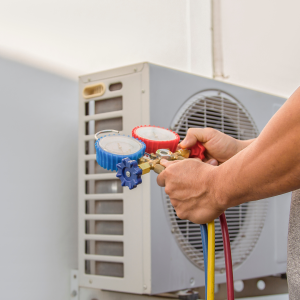
The cooling process in refrigerant systems depends on phase change and pressure manipulation. A refrigerant fluid is compressed in your air conditioner’s compressor, increasing its temperature and turning it into a hot, high-pressure liquid state.
Inside your home, the refrigerant absorbs heat and humidity, cooling the indoor air and condensing moisture. As the refrigerant evaporates, it captures that heat and pumps it outdoors, where it’s released via a fan blowing over the outdoor equipment coils.
The refrigerant then returns to its low-pressure fluid state and repeats the cycle. This constant loop ensures efficient, dependable cooling without the fluctuations of an evaporative system.
Because it removes humidity from the air, refrigerant cooling helps prevent mold, improves air quality, and keeps you from feeling sticky during humid months.
Choosing the Right Cooling System for Your Climate
So, how do you know which system is the best fit for your home? Here’s a simple comparison:
Evaporative cooling may be right if you:
- Live in a hot, dry climate.
- Need an efficient, low-cost solution.
- Want to cool a small, single-zone space.
Refrigerant-based air conditioning may be better if you:
- Want exact temperature control across seasons.
- Experience humidity or mixed climate conditions.
- Prioritize air quality and long-term efficiency.
Refrigerant systems often cost more upfront, but they tend to require less frequent maintenance and perform better in a wider range of weather conditions.
 The Bottom Line: Why Refrigerant Is the Superior Choice
To sum it up, while evaporative cooling has a role in dry environments, it lacks the flexibility and consistency that refrigerant systems provide.
Refrigerant-based air conditioning works by manipulating pressure, energy, and phase change, a process that gives you better control over indoor comfort. These systems don’t rely on water, so they maintain performance in humid weather and improve indoor air health by removing moisture.
If you’re unsure what system fits your home best, don’t guess. Our team at First Rate Plumbing Heating and Cooling can walk you through your options and help you maintain or replace your current system with one that matches your climate, budget, and comfort needs.
Schedule a consultation today to discover the cooling solution that’s sized, designed, and installed for maximum comfort in your home.

